Cross-Docking in Logistics: Types, Schemes and Advantages
Logistics is no longer built around long-term storage of goods in a warehouse. For businesses, processing speed, supply predictability, and cost control are now critical. The longer goods stay inside a terminal, the higher the costs for warehouse space, staff, and internal movement. That is why companies are moving to cross-docking — a model where goods spend almost no time inside the facility.
This format is used by retail, e-commerce, distribution companies, and transport hubs with large daily flows. Cross-docking reduces the time between receiving and dispatch to just a few hours.
At the same time, cross-docking in logistics requires precise synchronization of transport, receiving zones, sorting areas, and delivery routes. Without clear management, the process quickly loses efficiency.
What Cross-Docking Is and How the System Works
In simple terms, cross-docking works as follows: cargo arrives at the terminal, passes identification, is distributed by destination, and moves on without long-term placement in a storage area. The role of the facility is not to store goods, but to quickly redistribute flows.
A standard process looks like this:
- a vehicle arrives for unloading;
- the system reads shipment data;
- cargo is distributed by routes;
- batches are formed for further transportation;
- goods are dispatched to recipients.
In a traditional warehouse model, several days may pass between receiving and dispatch. Cross-docking reduces this period to a minimum.
The technology is suitable for:
- online stores;
- retail chains;
- distributors;
- logistics operators;
- large distribution facilities.
Why Businesses Move to Cross-Docking
The main reason is cost reduction. The less time products spend inside the terminal, the lower the cost of maintaining infrastructure.
The benefits of cross-docking include:
- faster delivery;
- reduced warehouse stock volume;
- fewer manual operations;
- lower risk of damage;
- more efficient use of transport.
Another advantage is more stable operation under high loads. When the flow increases sharply, a traditional warehouse begins to slow down because of overloaded zones and unnecessary internal movements. Cross-docking helps avoid these problems.
How Cross-Docking Works in a Warehouse
At first glance, the process looks simple: one vehicle is unloaded, another is loaded. But the system requires high accuracy at every stage.
Each shipment must be:
- correctly labeled;
- quickly identified;
- directed to the right zone;
- prepared for dispatch without delays.
If even one stage is slow, the entire flow begins to lose speed. That is why logistics complexes actively implement automation.
UIS develops solutions that help control cargo movement, coordinate transport, and manage flows in real time.
Which Cross-Docking Models Are Used Most Often
The format depends on the structure of deliveries and the business’s tasks. The most common models include:
- direct transshipment without storage;
- consolidation of batches from several suppliers;
- splitting one large delivery between different recipients;
- repacking or regrouping orders for specific routes.
Why the System Loses Efficiency Without Automation
With manual management, employees are more likely to make mistakes. That is why cross-docking operations are usually built around digital solutions.
Process management may include:
- WMS for controlling operations inside the terminal;
- TMS for transport coordination;
- automated sorters;
- scanners and data collection terminals;
- analytics platforms.
UIS helps connect warehouse, transport, and sorting processes into a single infrastructure where all areas work in sync.
Benefits of Cross-Docking for Logistics
Delivery speed has become one of the main factors of competition. Customers expect fast delivery, while businesses aim to reduce costs without losing service quality.
The benefits of cross-docking are especially visible at high volumes:
- less need for large storage areas;
- faster order processing;
- lower logistics costs;
- simpler flow management;
- higher delivery speed.
For businesses, this means more flexible and predictable logistics.
Why Cross-Docking Is Becoming a Standard
Just a few years ago, cross-docking was mainly used by large distribution centers. Today, companies of different sizes are implementing this model — from retail chains to e-commerce businesses and transport operators.
The reason is simple: logistics is increasingly focused not on long-term product storage, but on the speed of flow movement. The less time products spend inside the terminal, the more efficiently the entire chain works.

Parcel Locker as an Alternative to Courier Delivery
High workload and the constantly accelerating pace of life mean that customers are less willing to wait for a courier at home or adjust their day to a specific delivery time. Parcel lockers are gradually evolving from an additional option into a full-fledged way to receive orders — convenient for both customers and businesses.
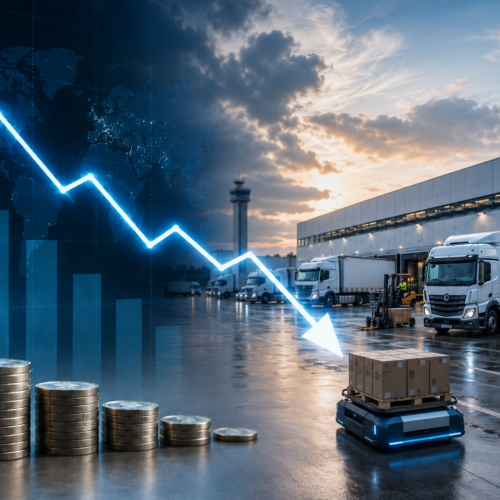
Reducing Logistics Costs Through Automation
Logistics is a system where any inaccuracy affects a company’s budget. Extra kilometers, incorrect weight data, warehouse delays, or underloaded trips quickly turn into financial losses.
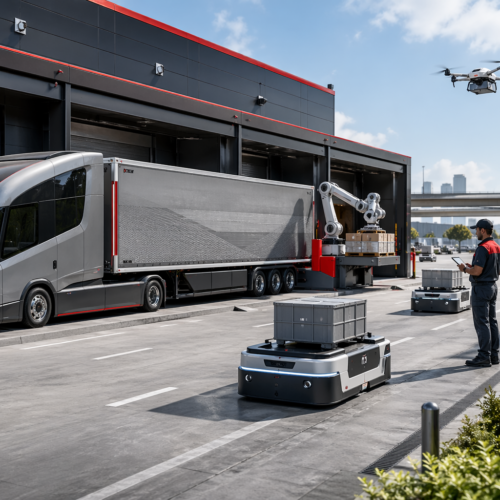
Logistics Automation Trends
Logistics is undergoing rapid transformation. The reasons are clear: digitalization, the growth of e-commerce, and rising customer expectations for delivery speed.
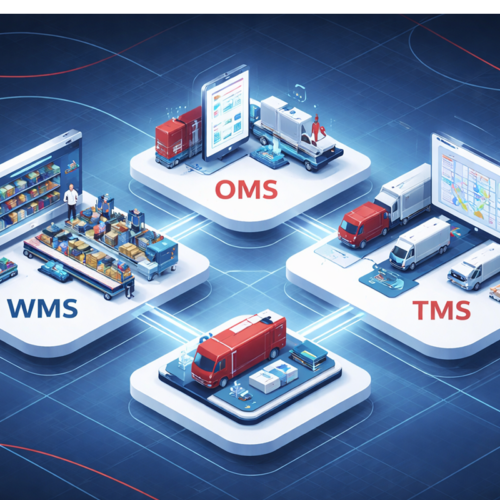
How WMS Integrates with TMS and OMS
As a company grows, a warehouse system alone is no longer enough. New challenges emerge around order processing, delivery, and data consistency across teams.
 Україна
 Great Britain
 Česká republika
 Қазақстан
 Deutschland
 Polska
 Oʻzbekiston
 Тоҷикистон
 España
 Argentina
 México
 Perú
Perú