Reducing Logistics Costs Through Automation
Logistics is a system where any inaccuracy affects a company’s budget. Extra kilometers, incorrect weight data, warehouse delays, or underloaded trips quickly turn into financial losses. That is why the question of how to reduce logistics costs remains one of the key priorities for businesses.
Rising fuel prices, staff shortages, and growing transportation volumes force companies to rethink their approach to supply chain management. With manual coordination, employees become overloaded, trucks are used inefficiently, and errors lead to additional costs.
Automation reduces expenses and simplifies daily operations. Digital solutions speed up data processing and make it possible to control routes, vehicle loading, and warehouse operations.
UIS develops solutions in this area for warehouse and transport logistics, helping companies reduce manual operations and operational losses.
Why Logistics Costs Keep Growing
Many companies underestimate how strongly small operational errors affect the budget. A few incorrectly picked orders, a delayed vehicle, or a poorly planned route can quietly increase expenses every day.
At the same time, logistics costs are not limited to transportation. They also include:
- staff costs;
- warehouse rent;
- returns;
- downtime;
- incorrect sorting;
- recounting and repacking of cargo.
When processes are managed manually, it is very difficult to control these losses. That is why cost optimization does not start with staff cuts, but with the implementation of digital technologies.
How to Minimize Errors
One of the most expensive problems is the human factor. An employee may mix up an address, enter incorrect dimensions, or send cargo along the wrong route. Each such situation creates additional logistics costs: repeat delivery, returns, order reprocessing, and customer complaint handling.
Automated systems help optimize logistics costs:
- WMS controls product movement, simplifies putaway and picking;
- TMS builds delivery processes based on vehicle load, traffic conditions, and delivery time;
- METRIX supports process analytics and shows where delays occur and which areas are overloaded;
- TiltTray and Switch Sorters distribute shipment flows by destination, reducing the number of manual operations.
UIS solutions allow businesses to see all processes as one connected system with precise operational control.
Where Businesses Lose Money Without Automation
Significant losses are often hidden in everyday routine tasks. While employees manually measure boxes, search for goods, or coordinate delivery by phone, the company loses time and resources.
The most costly issues include:
- vehicle downtime;
- measurement errors;
- uneven vehicle loading;
- returns;
- overloaded storage zones.
Automation delivers a visible effect in these areas. Logistics cost optimization at an enterprise may include:
- YARD systems that manage vehicle movement on warehouse premises and reduce queues at loading points;
- HUB solutions that speed up flow distribution between terminals;
- TiltTray and Switch Sorters that accelerate shipment processing.
UIS technologies perform operations faster and with fewer errors, even under high load on warehouse infrastructure.
Why Automation Affects More Than Speed
Many people think that technology solutions are needed only to speed up processes. In practice, the main result is cost reduction in logistics:
- accurate calculation of weight, dimensions, and routes helps avoid overpayment for transportation;
- balanced loading reduces the number of empty trips;
- warehouse operations through WMS reduce the number of errors and returns.
Reducing logistics costs is directly connected with automation. A business gains several advantages at once:
- less manual work;
- lower workload on staff;
- better use of transport;
- fewer returns;
- faster order processing.
How Logistics Changes with UIS
Logistics becomes a system where the warehouse, transport, and sorting processes work in sync. Analytics helps identify problem areas in advance and reduce the number of delays.
UIS connects processes into a single digital system, helping businesses control costs and process orders faster.

Parcel Locker as an Alternative to Courier Delivery
High workload and the constantly accelerating pace of life mean that customers are less willing to wait for a courier at home or adjust their day to a specific delivery time. Parcel lockers are gradually evolving from an additional option into a full-fledged way to receive orders — convenient for both customers and businesses.
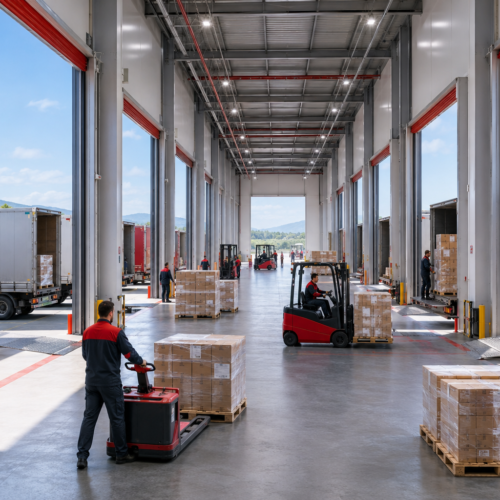
Cross-Docking in Logistics: Types, Schemes and Advantages
Logistics is no longer built around long-term storage of goods in a warehouse. For businesses, processing speed, supply predictability, and cost control are now critical.
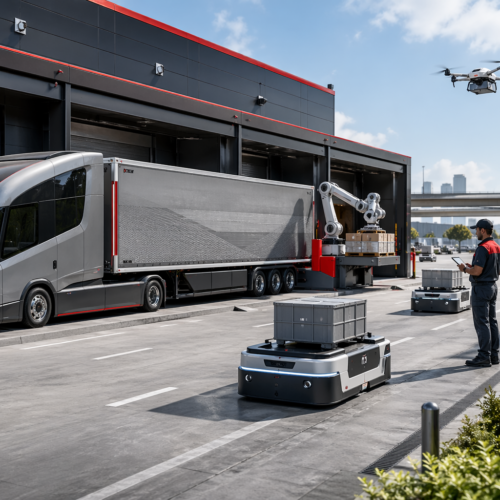
Logistics Automation Trends
Logistics is undergoing rapid transformation. The reasons are clear: digitalization, the growth of e-commerce, and rising customer expectations for delivery speed.
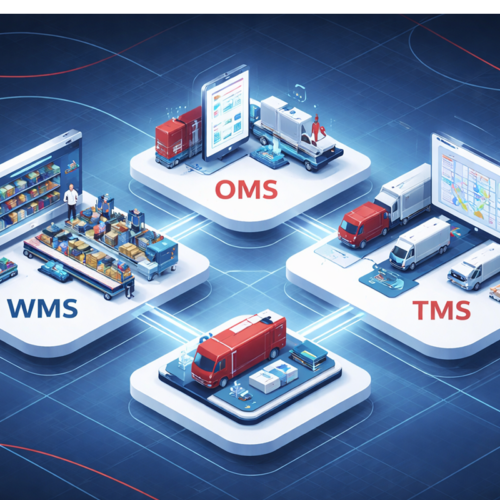
How WMS Integrates with TMS and OMS
As a company grows, a warehouse system alone is no longer enough. New challenges emerge around order processing, delivery, and data consistency across teams.
 Україна
 Great Britain
 Česká republika
 Қазақстан
 Deutschland
 Polska
 Oʻzbekiston
 Тоҷикистон
 España
 Argentina
 México
 Perú
Perú