How WMS Integrates with TMS and OMS
As a company grows, a warehouse system alone is no longer enough. New challenges emerge around order processing, delivery, and data consistency across teams. At that point, businesses need to connect separate systems within one digital environment and ensure smooth data exchange.
Each of these systems has a clear role:
- WMS: warehouse operations;
- OMS: order lifecycle;
- TMS: transportation and routing.
Used separately, each system covers only part of the process; however, without integration, data duplication, status inconsistencies, and time wasted on manual operations arise. That is why integrating TMS, WMS, and OMS becomes a necessary step as a business grows.
When systems are integrated, all actions are automatically recorded and shared across modules, making management more transparent and predictable.
Integrating Warehouse Operations with Delivery
Integrating TMS and WMS enables direct communication between the warehouse and logistics operations. Once order picking is complete, the shipment-ready status is sent to the transportation module. Based on this data, routes are generated, loads or delivery runs are assigned, and tasks are created for drivers or couriers.
Without TMS and WMS integration, employees are forced to transfer information manually, which increases the workload and the likelihood of errors. Automatic data exchange allows operations to be synchronized and speeds up the transition from order picking to shipment.
This becomes especially important when order volumes are high. The more orders that pass through the system, the higher the requirements for processing speed and accuracy. Integrating WMS and TMS helps keep operations stable even as the workload increases.
Order Management and Warehouse Coordination
The OMS tracks an order from the moment it is placed until it is handed over for shipment. When the OMS and WMS are integrated, data is automatically sent to the warehouse, where picking tasks are generated. Once the warehouse tasks are completed, the order status is updated and sent back to the OMS.
This approach eliminates the need for re-entering data and reduces the likelihood of discrepancies. All participants in the process work with up-to-date data, which simplifies monitoring and speeds up operations.
Benefits of OMS and WMS integration:
- a single information flow without duplication;
- reduced processing time;
- fewer operational errors;
- visibility across every stage of the process;
- scalability.
As a result, the company gains not a set of separate tools, but a coordinated structure where each element complements the others.
A Unified Order Management Ecosystem: The Role of UIS
Effective integration of WMS, TMS, and OMS requires more than technical setup, it also requires a clear understanding of how the business operates.
Ukrainian Intelligent Systems (UIS) specializes in implementing and integrating these solutions while taking into account each client’s specific needs.
UIS specialists design data flows so information moves between systems without delays or errors. Warehousing, transportation, and order management all work within one unified environment where all operations are recorded and available for analysis.
This approach improves manageability, reduces costs, and ensures stable operations even as volumes increase. For businesses, this becomes the foundation for further growth and improved service quality.

Parcel Locker as an Alternative to Courier Delivery
High workload and the constantly accelerating pace of life mean that customers are less willing to wait for a courier at home or adjust their day to a specific delivery time. Parcel lockers are gradually evolving from an additional option into a full-fledged way to receive orders — convenient for both customers and businesses.
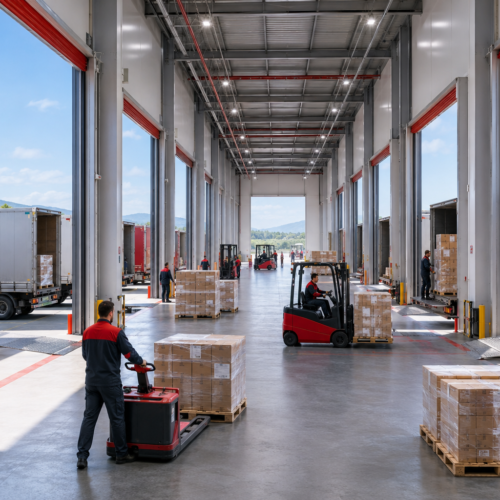
Cross-Docking in Logistics: Types, Schemes and Advantages
Logistics is no longer built around long-term storage of goods in a warehouse. For businesses, processing speed, supply predictability, and cost control are now critical.

Reducing Logistics Costs Through Automation
Logistics is a system where any inaccuracy affects a company’s budget. Extra kilometers, incorrect weight data, warehouse delays, or underloaded trips quickly turn into financial losses.
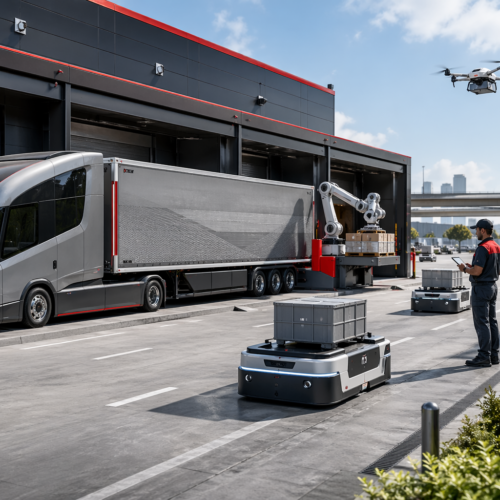
Logistics Automation Trends
Logistics is undergoing rapid transformation. The reasons are clear: digitalization, the growth of e-commerce, and rising customer expectations for delivery speed.
 Україна
 Great Britain
 Česká republika
 Қазақстан
 Deutschland
 Polska
 Oʻzbekiston
 Тоҷикистон
 España
 Argentina
 México
 Perú
Perú