Logistics Automation Trends
Logistics is undergoing rapid transformation. The reasons are clear: digitalization, the growth of e-commerce, and rising customer expectations for delivery speed. As a result, innovative technologies in logistics are no longer just a competitive advantage — they are becoming a necessity.
Companies that implement modern logistics solutions gain greater flexibility, better process visibility, and the ability to reduce operational costs.
What Is Driving the Development of Logistics?
To understand where the logistics industry is heading, it is important to look at the key drivers of change:
- growth of online commerce and omnichannel sales;
- increasing volumes of data and the need to analyze it;
- labor shortages in warehouses;
- rising customer expectations for fast delivery;
- globalization and more complex supply chains.
These factors are accelerating the adoption of automation and digital tools across the logistics sector.
Key Trends in Logistics Development
Let’s look at the main trends that are already transforming the logistics industry.
Warehouse Automation and Robotics
One of the key areas of development is the automation of warehouse operations. Modern logistics solutions include:
- automated storage and retrieval systems (AS/RS);
- autonomous mobile robots (AMR);
- automated sorting and packing lines.
The implementation of these systems helps reduce dependence on manual labor and speed up order processing.
Artificial Intelligence and Analytics
Artificial intelligence (AI) and machine learning are becoming increasingly important in logistics. They are used for:
- demand forecasting;
- delivery route optimization;
- inventory management;
- identifying bottlenecks in operations.
With these tools, companies can make decisions based on data rather than intuition.
Internet of Things (IoT)
IoT devices provide greater visibility over the movement of goods. They help companies:
- track cargo location;
- monitor temperature and storage conditions;
- improve supply chain transparency.
Such solutions are especially important for pharmaceuticals, food products, and other sensitive categories that require strict control.
Cloud Technologies and Integrations
Modern logistics systems are increasingly moving to the cloud. This provides:
- access to data from anywhere;
- scalable solutions;
- integration with ERP, CRM, and WMS systems.
Cloud-based logistics solutions simplify business management and make it easier to implement new tools across operations.
Delivery Automation and the Last Mile
The last mile remains one of the most complex and costly stages of logistics. In response, companies are adopting:
- intelligent routing systems;
- drones and autonomous vehicles;
- parcel lockers and pickup points.
These solutions help reduce delivery times and improve convenience for customers.
Digital Twins and Simulation
Digital models of warehouses and logistics processes allow companies to:
- test changes without operational risks;
- forecast workload;
- optimize resources.
This is an important step toward proactive logistics management.
The Future of Logistics: What to Expect
The future of logistics is closely linked to full digitalization and the integration of all processes into a single ecosystem. Companies will continue moving toward:
- autonomous warehouses with minimal human involvement;
- fully transparent supply chains;
- predictive logistics, where systems forecast and prevent problems before they happen;
- faster delivery models, including same-day and next-hour delivery.
The development of logistics is directly connected to technology and automation. Companies that already use automation, AI, and IoT gain a significant market advantage. Current trends show that the future belongs to flexible, digital, and highly automated systems that can quickly adapt to change and scale with the business.
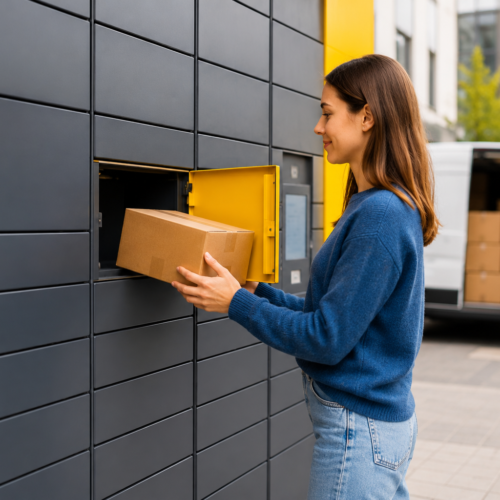
Parcel Locker as an Alternative to Courier Delivery
High workload and the constantly accelerating pace of life mean that customers are less willing to wait for a courier at home or adjust their day to a specific delivery time. Parcel lockers are gradually evolving from an additional option into a full-fledged way to receive orders — convenient for both customers and businesses.
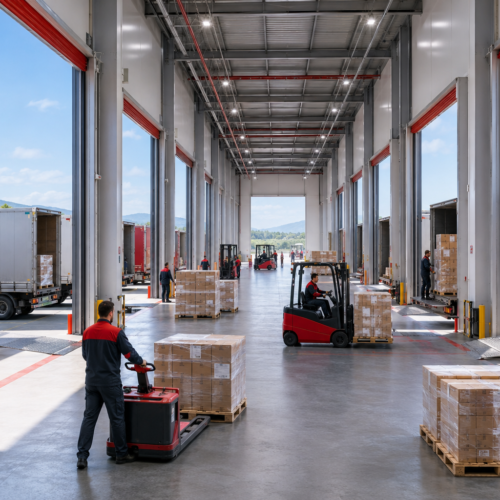
Cross-Docking in Logistics: Types, Schemes and Advantages
Logistics is no longer built around long-term storage of goods in a warehouse. For businesses, processing speed, supply predictability, and cost control are now critical.
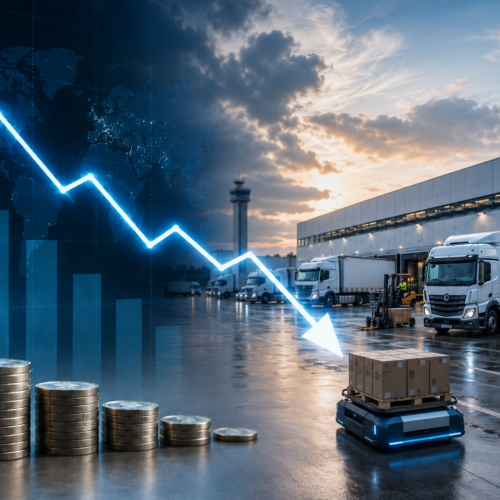
Reducing Logistics Costs Through Automation
Logistics is a system where any inaccuracy affects a company’s budget. Extra kilometers, incorrect weight data, warehouse delays, or underloaded trips quickly turn into financial losses.
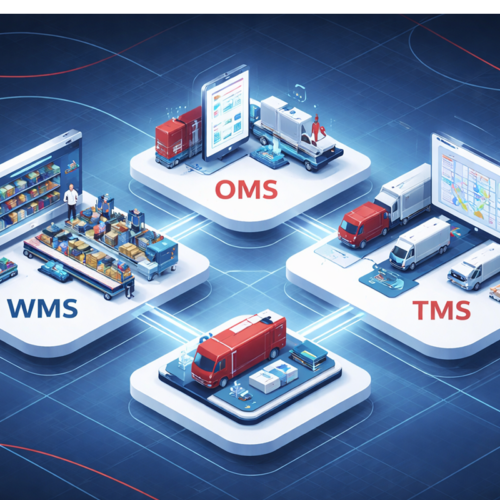
How WMS Integrates with TMS and OMS
As a company grows, a warehouse system alone is no longer enough. New challenges emerge around order processing, delivery, and data consistency across teams.
 Україна
 Great Britain
 Česká republika
 Қазақстан
 Deutschland
 Polska
 Oʻzbekiston
 Тоҷикистон
 España
 Argentina
 México
 Perú
Perú