Optimization of Logistics Business Processes
Logistics is a critical aspect of modern business. Today, it involves not only moving goods from point A to point B, but also a whole range of activities, including receiving goods, storing them, picking, sorting, shipping, and delivering them. Thanks to the efficient operation of logistics systems, task completion speeds up, customer service quality improves, and costs are optimized. Optimizing logistics processes allows for:
- reduce costs;
- improve operational accuracy;
- speed up inventory turnover;
- minimize errors and losses;
- enhance the customer experience.
What is logistics optimization?
Logistics optimization is not simply about automating processes. It involves structuring each stage in such a way as to maximize efficiency while minimizing “dead zones,” unnecessary operations, manual labor, long wait times, and errors.
How can a company optimize its logistics? Key areas include:
- Process standardization. Clear workflows are followed, and uniform procedures are applied across all areas—receiving, putaway, picking, sorting, and shipping.
- Implementation of automation. Barcode scanners, sensors, conveyors, sorting systems, and software systems are used.
- System integration. For automation to work, all systems must operate as a unified whole. When WMS, TMS, OMS, and systems for managing delivery, warehousing, and sorting are integrated, tasks are completed quickly and without errors.
- Quality control and monitoring. Everything that affects process quality must be visible—errors, defects, unnecessary steps in movements, etc.
- Flexibility. It must be possible to quickly adapt processes to changing conditions (e.g., increased product volumes, seasonality, the emergence of new sales channels, new products).
Logistics Optimization: Solutions from UIS
We have developed a suite of software and hardware solutions designed to optimize logistics and warehouse processes. This includes software solutions, hardware solutions, and accessories.
UIS Software Solutions
The UIS suite of systems is designed to optimize logistics business processes across various enterprises:
- WMS – Warehouse Management System. It enables the quick and efficient optimization of logistics processes in the warehouse. Operational accuracy increases to approximately 99.5%. It controls the receipt, placement, inventory tracking, movement, and shipment of goods.
- TMS – Courier Delivery Management System. It allows you to track the entire cycle—from the courier’s receipt of the shipment to delivery—and manage routes, couriers, and deadlines. Thanks to the system, you can optimize time and costs.
- HUB – a system for managing long-haul transportation. It enables the organization of long-distance shipments.
- OMS – an order management system that automatically determines the optimal logistics. It takes into account order parameters, availability, locations, and capacity utilization.
- PostOffice. A software solution that automates the operations of post offices and order pickup points. Optimization of logistics costs and standardization, necessary for the smooth operation of the delivery/pickup system.
- YARD – a yard management system: managing vehicle flows and movements within a warehouse or logistics hub, preventing congestion, downtime, and errors during loading and unloading.
Hardware Solutions and Components
Implementing the right hardware infrastructure can boost operational efficiency. We offer the following solutions:
- TiltTray Sorter – an automatic sorting system for small parcels weighing up to 10 kg.
- Switch Sorter – an automatic system for large parcels (up to 30 kg).
- Pick by Light and Put to Light – accelerate order picking, sorting, and placement of goods.
- Metrix – a system for measuring the weight and dimensions of shipments.
- Parcel lockers – automated order pickup systems.
Optimizing logistics business processes enables a coordinated, harmonious, and clear approach to problem-solving. You achieve fewer errors, improved operational speed, increased customer satisfaction, and cost savings.
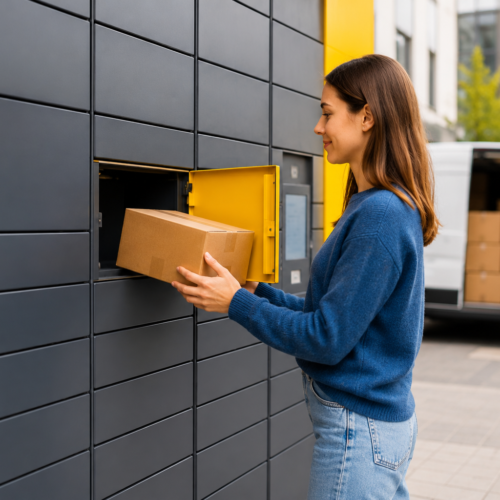
Parcel Locker as an Alternative to Courier Delivery
High workload and the constantly accelerating pace of life mean that customers are less willing to wait for a courier at home or adjust their day to a specific delivery time. Parcel lockers are gradually evolving from an additional option into a full-fledged way to receive orders — convenient for both customers and businesses.
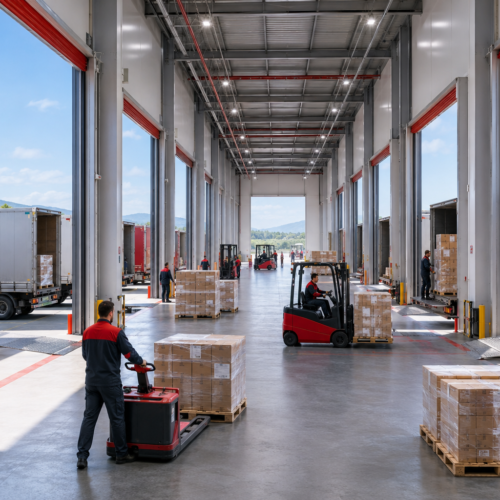
Cross-Docking in Logistics: Types, Schemes and Advantages
Logistics is no longer built around long-term storage of goods in a warehouse. For businesses, processing speed, supply predictability, and cost control are now critical.

Reducing Logistics Costs Through Automation
Logistics is a system where any inaccuracy affects a company’s budget. Extra kilometers, incorrect weight data, warehouse delays, or underloaded trips quickly turn into financial losses.
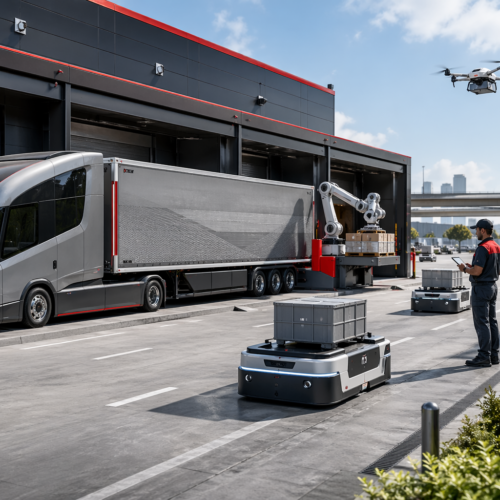
Logistics Automation Trends
Logistics is undergoing rapid transformation. The reasons are clear: digitalization, the growth of e-commerce, and rising customer expectations for delivery speed.
 Україна
 Great Britain
 Česká republika
 Қазақстан
 Deutschland
 Polska
 Oʻzbekiston
 Тоҷикистон
 España
 Argentina
 México
 Perú
Perú