What is last-mile delivery?
When it comes to modern logistics, the term “last-mile delivery” is becoming increasingly common. Many people wonder what it is and why there’s so much talk about it. In reality, it’s quite simple. Last-mile delivery is the final stage of delivery – the moment when the goods have already arrived in the destination city or at a warehouse and are then sent directly to the recipient.
This final stage of delivery has the biggest impact on the customer experience. You can have a perfectly organized warehouse system and transport between cities, but if an order is late at the final stage or arrives with issues, that’s exactly what the customer will remember. That’s why the last mile in logistics is considered the most “sensitive” part in the entire chain.
Last-mile logistics: why it’s so important
Last-mile delivery is not just a short leg of the journey. It is the most challenging and costly stage of delivery. There are no long routes with a single destination; on the contrary, a single last-mile carrier must deliver dozens, and sometimes hundreds, of orders to different addresses.
The process becomes even more challenging in urban environments:
- traffic jams;
- dense urban development;
- parking restrictions;
- the need to deliver orders within a specific time window.
These factors make the process unique, requiring precise calculations and flexibility.
This is also the stage where the customer directly experiences the service. The courier, delivery times, and the convenience of receiving the order – all of these factors influence the perception of the service, which is why companies are increasingly investing in improving this segment.
How UIS Helps Optimize Last-Mile Delivery
Today, it is no longer possible to solve last-mile delivery challenges relying solely on couriers. System-level solutions are needed – the kind that Ukrainian Intelligent Systems (UIS) provides. UIS is a company specializing in logistics automation and the development of comprehensive IT solutions.
UIS implements transportation management systems (TMS) that help businesses manage the entire delivery process, from order distribution to routing and delivery execution. Such solutions help last-mile carriers not just “deliver orders,” but work within a clearly defined process.
What this means in practice:
- automatic generation of optimal routes;
- reduced human error;
- real-time delivery tracking;
- lower logistics costs;
- improved delivery accuracy and speed.
Essentially, with UIS, last-mile delivery in logistics becomes a manageable process rather than a chaotic series of actions – which is particularly important for e-commerce and companies with high order volumes, where an error at the final stage directly impacts profitability.
The Last Mile with UIS: A Growth Driver for Business
Last-mile logistics is the point where the business meets the customer. Internal performance metrics no longer apply here; only the result matters:
- whether the order was delivered on time;
- how convenient the experience was.
That is precisely why companies are increasingly investing in automation and digital solutions. Without this, scaling up delivery becomes virtually impossible.
Last-mile delivery is not about distance, but about service quality. The better this stage is organized, the stronger the company’s competitive advantage becomes. Ukrainian Intelligent Systems provides proven tools that allow you to fully control and optimize the final stage of the logistics chain.
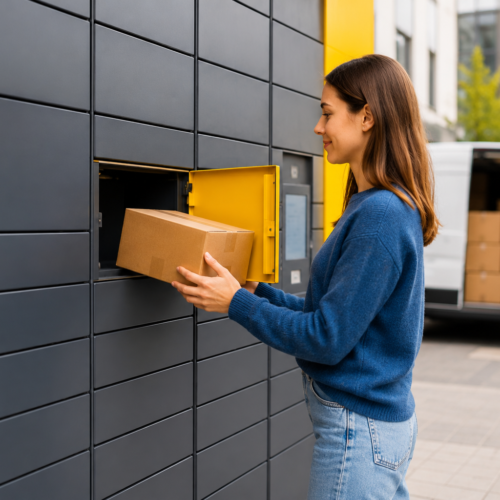
Parcel Locker as an Alternative to Courier Delivery
High workload and the constantly accelerating pace of life mean that customers are less willing to wait for a courier at home or adjust their day to a specific delivery time. Parcel lockers are gradually evolving from an additional option into a full-fledged way to receive orders — convenient for both customers and businesses.
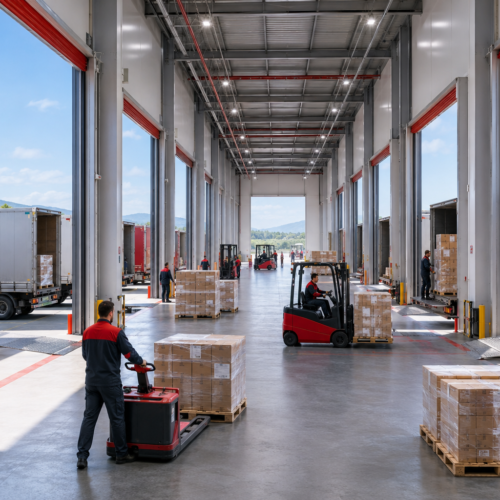
Cross-Docking in Logistics: Types, Schemes and Advantages
Logistics is no longer built around long-term storage of goods in a warehouse. For businesses, processing speed, supply predictability, and cost control are now critical.
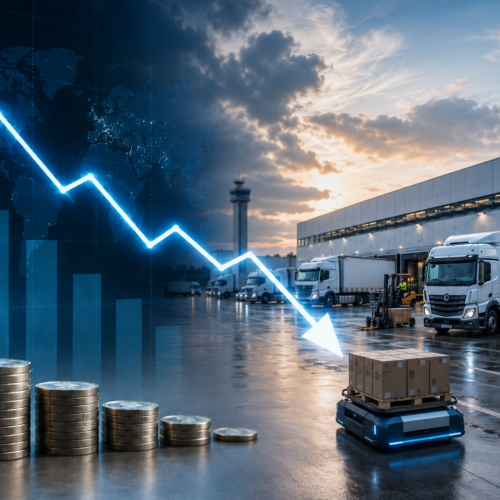
Reducing Logistics Costs Through Automation
Logistics is a system where any inaccuracy affects a company’s budget. Extra kilometers, incorrect weight data, warehouse delays, or underloaded trips quickly turn into financial losses.
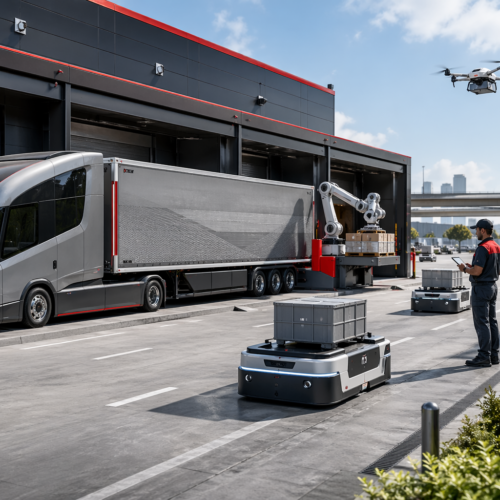
Logistics Automation Trends
Logistics is undergoing rapid transformation. The reasons are clear: digitalization, the growth of e-commerce, and rising customer expectations for delivery speed.
 Україна
 Great Britain
 Česká republika
 Қазақстан
 Deutschland
 Polska
 Oʻzbekiston
 Тоҷикистон
 España
 Argentina
 México
 Perú
Perú