It is a store without shoppers, designed for picking online orders.
Dark Store: What It Is and How It Works
Warehouse
03.07.2026
Online stores are growing, and customer expectations are rising with them. People are no longer willing to wait several days or tolerate mistakes in their orders.
While it used to be enough simply to have a website, today the companies that win are those that can pick products quickly and deliver them almost immediately. That is why the Dark store format is becoming increasingly common in e-commerce.
Dark Store: What It Is and Why It Is Discussed So Often
The term Dark store literally refers to a “dark store.” However, there is nothing gloomy about it. It is a space that resembles a regular supermarket, but without shoppers. Customers do not enter the premises; only employees work there, handling the fulfillment of online orders.
The first facilities of this type appeared in Europe, and the British retailer Tesco is often mentioned among the pioneers of the format. Later, companies such as Getir, Gorillas, and others adopted the model, focusing on fast delivery.
The main idea is simple: the space works entirely with online orders. There are no queues, checkout counters, or displays designed for offline shoppers.
How a Dark Store Works
The operating logic is quite simple:
- The customer places an order through a website or app.
- The system automatically transfers the data to employees.
- The picker receives the picking route.
- Products are picked and packed.
- The order is handed over to a courier or sent to a pickup point.
The entire process is designed to reduce unnecessary movement and shorten picking time.
Modern dark stores often work together with WMS and OMS. These systems control stock levels, distribute tasks, and help avoid errors during order fulfillment.
Benefits of Dark Store for E-commerce
The rapid growth of online retail pushes companies to look for ways to speed up operations. In this context, the benefits of Dark store for e-commerce become increasingly clear:
- high order processing speed;
- fewer errors;
- accurate stock control;
- delivery within hours;
- more efficient use of space;
- lower costs for maintaining a sales floor;
- convenient storage organization.
In addition, employees do not cross paths with shoppers, so nothing distracts them from their work.
Many companies also implement Pick by Light and Put to Light. Light indication helps employees find the right positions faster and sort goods more accurately.
Difference Between a Dark Store, a Warehouse, and a Store
Despite the external similarity, the difference is significant:
A regular store is created for shoppers. Design, merchandising, and attractive product display are important here.
A traditional warehouse is focused on storing large batches of products. It may be located far from the city, and picking one order usually takes more time.
Darkstore combines the advantages of both formats. In terms of assortment, it resembles a supermarket, while in terms of process organization, it is closer to a modern distribution center.
| Format | Main task |
| Store | Sales to visitors |
| Warehouse | Product storage |
| Dark store | Fast picking of online orders |
Because it is located within a city or urban area, a Dark store helps solve the last-mile delivery challenge and reduce delivery time.
Why Dark Store Helps Speed Up Delivery
The last stage of delivery is often the most expensive and complex. Couriers have to deal with traffic, while customers want to receive their purchases as quickly as possible.
When products are located closer to the consumer, logistics become more efficient. That is why dark stores are placed near residential areas, business districts, and major transport routes.
With properly organized processes, an order can reach the customer within 30–60 minutes after being placed.
How to Convert a Store into a Dark Store
Many business owners are interested in how to convert retail space into a Darkstore without major investment. In many cases, there is no need to open a completely new facility.
The conversion process includes:
- assortment analysis;
- changing the product placement layout;
- installing racks;
- implementing WMS;
- organizing receiving and packing zones;
- setting up logistics;
- training staff.
This approach allows companies to use existing space and launch an online sales direction faster.
What Equipment Is Used in a Dark Store
Efficiency depends not only on software. Space organization also plays an important role:
- metal racks;
- refrigeration chambers;
- picking carts;
- barcode scanners;
- mobile data terminals;
- Pick by Light systems;
- Put to Light sorting stations;
- conveyor lines.
All of this helps speed up order processing and improve accuracy.
The Future of the Darkstore Format
Online retail continues to grow, and demand for fast delivery is growing with it. The “dark store” format is becoming one of the key development directions in e-commerce.
A few years ago, such facilities were rare. Today, they are opened by grocery chains, marketplaces, cosmetics retailers, electronics stores, and home goods retailers.
It is quite possible that in the coming years, a significant share of online orders will be picked in dark stores.
The format should not be seen as a temporary trend. It is a logical stage in the development of e-commerce, where speed, accuracy, and convenience become key competitive advantages. Companies that rely on automation and build internal logistics properly gain the ability to serve more customers and do it faster than competitors.
Frequently Asked Questions (FAQ)
What is a Dark store in simple terms?
How does a Dark Store work?
Orders come through a website or app, after which employees pick the products and hand them over for delivery.
What is the difference between a Dark store, a warehouse, and a store?
It combines storage and fast fulfillment functions while being located closer to customers.
Can an existing store be converted into a Dark store?
Yes, many companies use existing premises and adapt them for online sales.
Why are Darkstores becoming popular?
They help reduce delivery time, decrease the number of errors, and improve service quality.
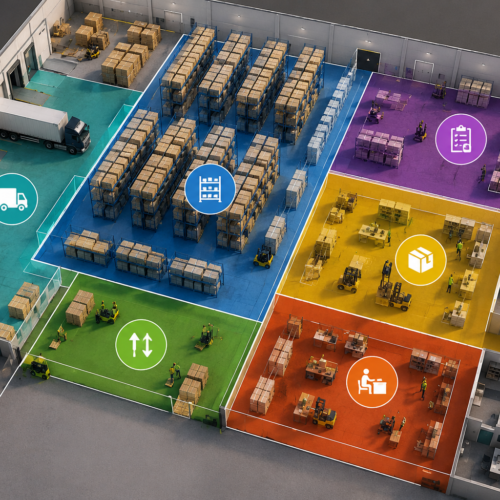
Warehouse Zoning: Efficient Space Planning
A warehouse can occupy thousands of square meters and still operate more slowly than a smaller facility if there is chaos inside. Proper space organization directly affects order processing speed, company costs, and employee convenience.
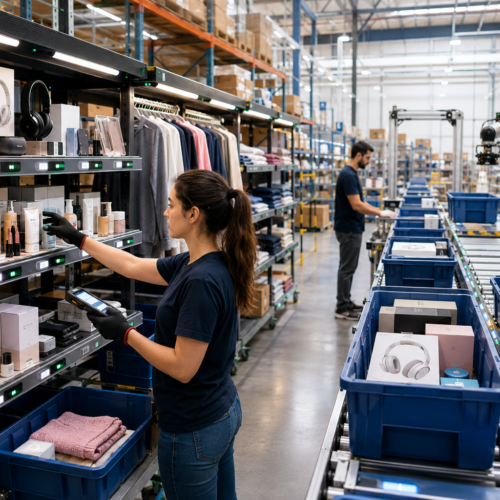
How to Automate Order Picking for an Online Store
Order volumes are growing, and customer expectations are rising with them. While a small online store may once have managed with a few employees and simple inventory tracking, manual processes start slowing operations down as volumes increase.
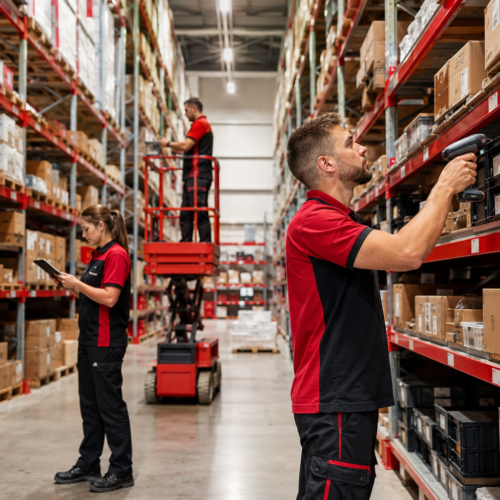
Conducting a Warehouse Inventory: A Comprehensive Guide
Even a well-organized warehouse can gradually lose inventory accuracy if product movement is not monitored regularly. Receiving errors, stock mismatches, incorrect putaway, and losses during picking accumulate over time and affect not only system balances but also the company’s financial performance.
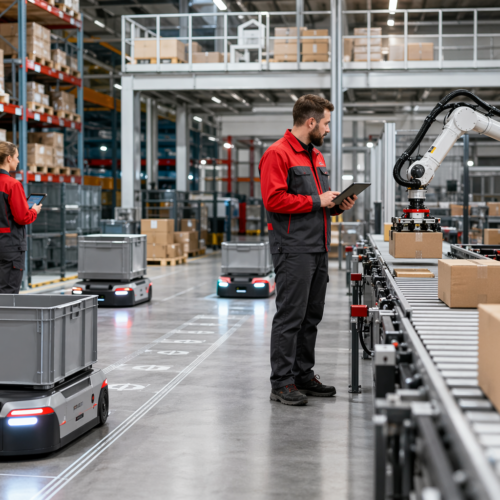
Automation of Warehouse Logistics Processes
Warehouse logistics is one of the most resource-intensive areas of business. Profitability is affected by many factors, including inventory errors, order processing delays, and inefficient use of resources.
 Україна
 Great Britain
 Česká republika
 Қазақстан
 Deutschland
 Polska
 Oʻzbekiston
 Тоҷикистон
 España
 Argentina
 México
 Perú
Perú